
Personal Style · 13 min read · September 8, 2026
Seasonal Color Analysis: Find Your Undertone and Palette
Read undertone, value and contrast together to find your closest seasonal palette—and use it as a flexible guide rather than a list of restrictions.
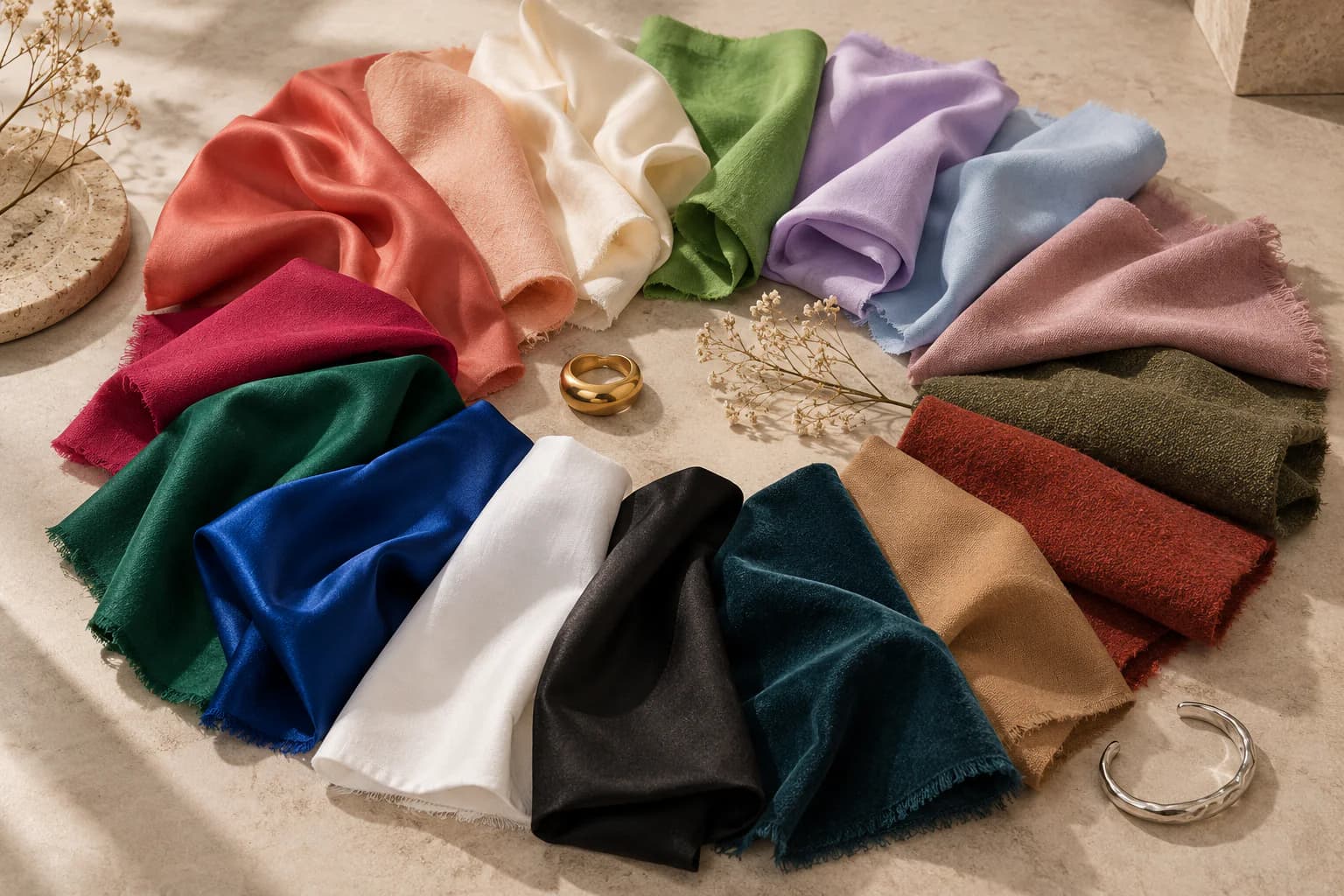
Seasonal color analysis considers skin undertone, hair and eye color, overall value and natural facial contrast. Its practical purpose is not to force everyone into four boxes, but to identify color qualities that tend to look balanced near the face.
How to identify your skin undertone
Undertone differs from surface color and usually remains stable when you tan. In indirect daylight and without makeup, compare bright white with cream, then silver with gold near your face. Notice which option softens shadows, evens the complexion and defines the eyes rather than simply choosing the metal you prefer.
- Warm: cream, gold and yellow-based colors may look integrated with the complexion.
- Cool: bright white, silver and blue-based colors may create a cleaner effect.
- Neutral: both groups may work; value or chroma may be the more important quality.
- Olive: the skin can read greenish and neutral, making the vein test especially unreliable.
The four seasonal palettes
Spring: warm, light, bright
Peach, coral, warm pink, fresh green, turquoise and light camel lead the palette. Warm navy or chocolate may be softer alternatives to heavy black.
Summer: cool, light, muted
Dusty rose, lavender, powder blue, sage, soft navy and cool gray work naturally. Very bright or orange-based colors can dominate the face.
Autumn: warm, deep, muted
Rust, mustard, olive, teal, warm burgundy and rich browns form the core. Complex, softened earth tones are characteristic.
Winter: cool, deep, bright
Black-and-white contrast, cobalt, fuchsia, emerald, cool red and icy colors are strong. Clear neutrals often outperform faded beige.
How to test colors at home
- Stand in indirect daylight and switch off warm or colored artificial lights.
- Remove makeup, cover dyed hair with a neutral cloth and wear gray.
- Hold warm and cool fabrics of similar depth under the chin.
- Watch changes in under-eye shadows, redness, lip definition and eye clarity—not the attractiveness of the fabric itself.
- Photograph every comparison under identical conditions and review the images side by side.
Why are there twelve sub-seasons?
Four seasons are a useful start, but temperature is not dominant for everyone. Systems with categories such as Bright Winter, Soft Autumn and Light Summer describe cases where chroma or value leads. Finding your two strongest qualities is often more reliable than forcing a precise sub-season immediately.
Applying a palette to your wardrobe
Do not turn the palette into an instant shopping list. Test what you own first, especially tops, outerwear and accessories near the face. A less harmonious color can work below the waist or be bridged with a scarf, collar or jewelry in your palette.
- Choose two or three dependable neutrals.
- Select three main colors you will wear regularly.
- Test two energetic accent colors through accessories.
- Treat makeup, eyewear and hair color as part of the palette around your face.
Common color-analysis mistakes
Relying only on vein color, comparing photos shot in different light, confusing surface redness with cool undertone and eliminating favorite colors are common mistakes. Camera white balance can also shift skin color. When uncertain, repeat real-fabric comparisons in consistent daylight.
“A useful palette does not ban colors you love; it gives you more ways to wear them harmoniously near your face.”
Frequently asked questions
What is seasonal color analysis?
It evaluates undertone, hair and eye color, value and natural contrast, then describes harmonious color qualities through Spring, Summer, Autumn or Winter palettes.
Can vein color determine undertone?
Not reliably on its own. Lighting, skin thickness and olive undertones affect vein appearance. Combine metal and warm-versus-cool fabric comparisons instead.
Does dyed hair change my color season?
It does not change skin undertone, but it can change facial contrast and the overall effect of colors. Covering dyed hair during analysis makes the underlying qualities easier to see.
Can I wear colors outside my palette?
Absolutely. Wear them away from the face, bridge them with an in-palette accessory or use them as an intentional contrast.