
Personal Style · 12 min read · September 8, 2026
Body Shape Guide: How to Measure and Dress Your Proportions
Compare your bust, waist and hip measurements to understand your proportions and choose fit based on comfort rather than labels.
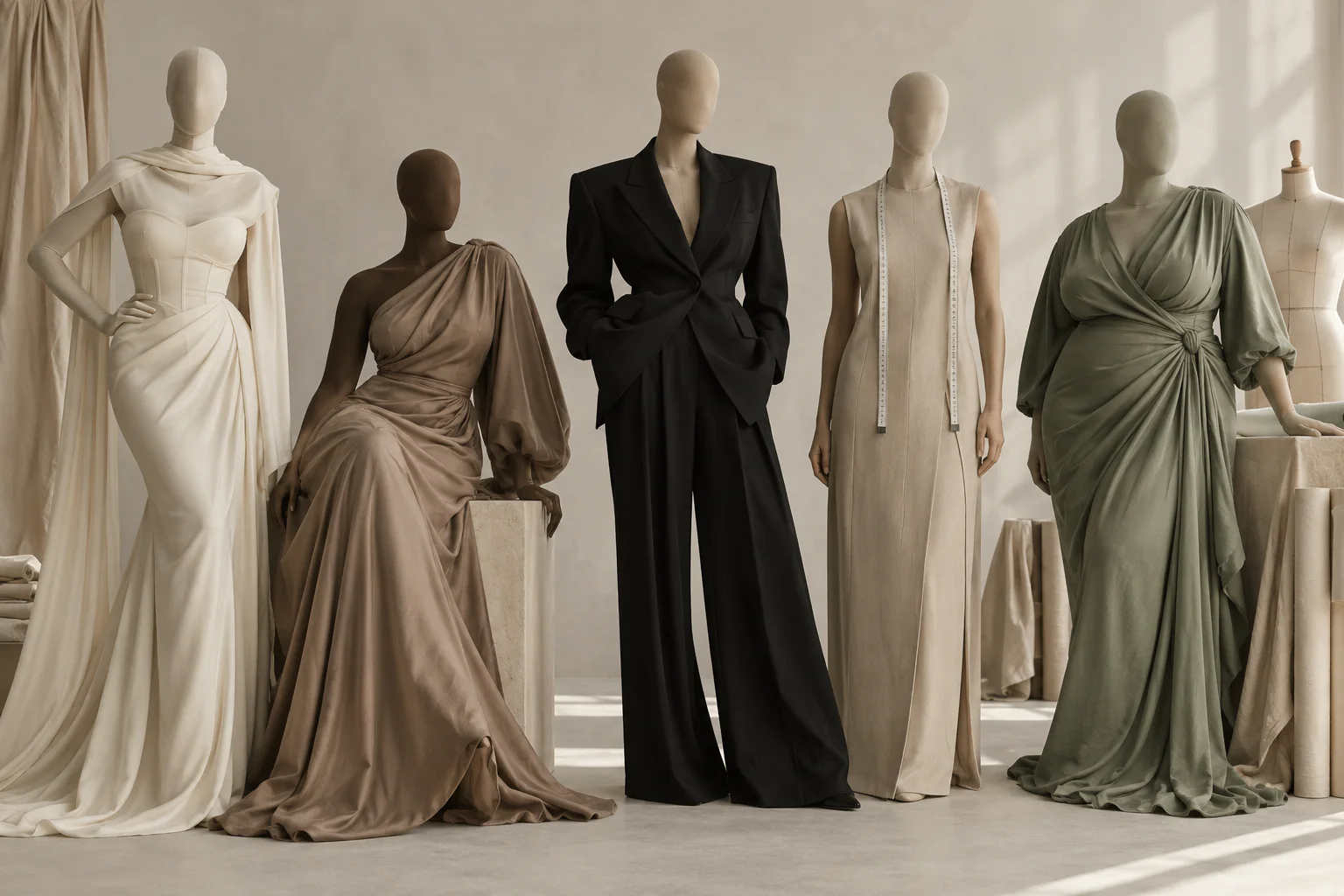
A body shape guide is useful not because it puts people into fixed boxes, but because it makes the relationship between bust, waist and hips easier to read. Height, weight and clothing size do not define shape on their own. Two people who wear the same size may have different proportions and experience the same jacket very differently.
How to take accurate body measurements
Measure over light clothing, stand naturally and keep the tape parallel to the floor without compressing the skin. Breathe normally.
- Bust: measure around the fullest point while keeping the tape level.
- Waist: measure the natural crease that appears when you bend sideways; it may not align with your navel.
- Hips: with feet together, measure around the fullest point of the hips and seat.
Five common body-shape profiles
Hourglass
Bust and hips are similar, with a distinctly narrower waist. Wrap pieces and waist-following cuts can preserve that balance.
Pear / triangle
Hips are wider than the bust. Lighter or textured tops and straight or softly flared trousers can redistribute emphasis.
Apple / oval
The waist is relatively close to the bust and hips. Open necklines, fluid fabrics and comfortable waistbands can create an uninterrupted line.
Rectangle
Bust, waist and hips are relatively close. Layers, belts, pleats and placed volume can create definition wherever you want it.
Inverted triangle
The bust is wider than the hips. A-line skirts, wide-leg trousers, texture or color below the waist can balance visual weight.
How to dress each body shape
Hourglass
Gently shaped tailoring, wrap tops and trousers that meet the natural waist can follow existing proportions. If you prefer oversized clothing, keep a clear line with an open jacket or a layer ending near the waist.
Pear
Boat necks, defined shoulders and textured or lighter tops can draw the eye upward, while straight or softly flared trousers create a continuous lower line. These are options, not rules: fitted and contrasting pieces work when your intention is to celebrate the hips.
Apple
V necklines, open single-breasted jackets and fluid fabrics create a vertical direction. Check that waistbands remain comfortable when sitting; rise and fabric recovery matter more than the label on the size.
Rectangle
Cropped jackets, pleats, peplums and belts introduce new focal points. Alternatively, monochrome straight cuts can deliberately highlight the clean geometry of your natural silhouette.
Inverted triangle
Simple open necklines above and wide-leg trousers, A-line skirts or texture below can distribute emphasis. Strong shoulders are not forbidden; repeat their visual weight lower down if you want a balanced dramatic look.
Why the result is not absolute
Bodies are more varied than five categories. Bust projection, shoulder slope, torso length, height and weight distribution change how identical circumferences look. Treat the result as a starting point, then prioritize movement, comfort and the way the fabric behaves during a real fitting.
“Body shape is not a value judgment; it is a practical map for understanding how clothes behave on your proportions.”
Frequently asked questions
Which measurements do I need to find my body shape?
Fullest bust, natural waist and fullest hip circumferences are enough for a useful comparison. Keep the tape level and comfortably close to the skin.
Can I be between two body shapes?
Yes. These are approximate proportion profiles, not strict biological categories. It is reasonable to combine advice from two profiles.
Do I have to dress for my body shape?
No. The guidance explains how to create certain visual effects; personal style, comfort and what you want to emphasize should lead the decision.
Can my body shape change with weight?
It can if muscle or fat distribution changes your measurement ratios. Retaking measurements after a significant change gives a more current result.