
Clothing Guide · 15 min read · September 8, 2026
Fabric Care Guide: Washing, Drying and Storage
Read care labels correctly and use practical steps to wash, dry and store common fabrics with less energy and wear.
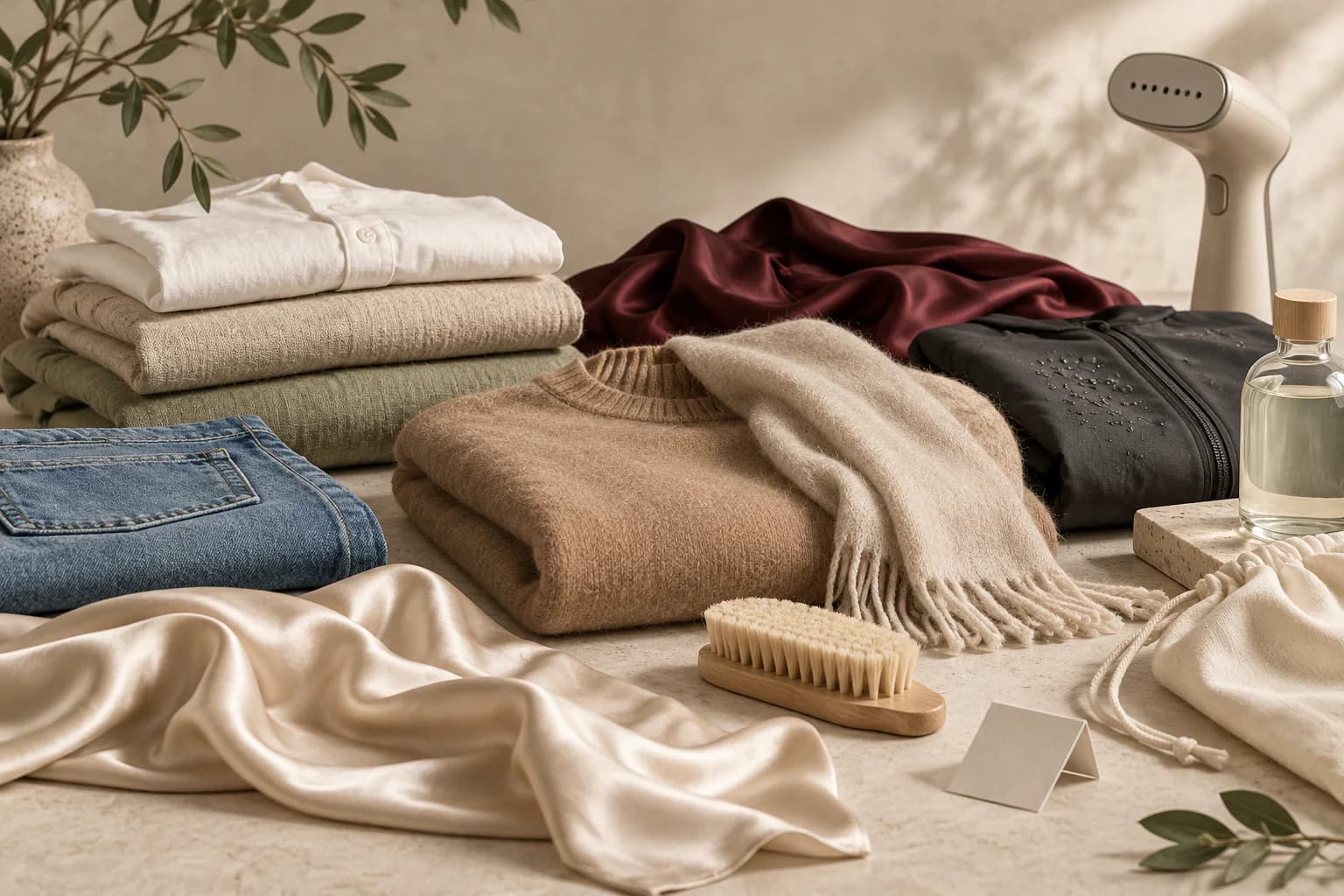
Good fabric care preserves color, shape and surface texture. The sewn-in care label always comes first because the same fiber may need different treatment when dyes, finishes, linings or trims change. Use this guide as a general starting point within the limits set by the garment label.
How to read care-label symbols
- Wash tub: shows the home-washing method and maximum temperature. Lines underneath indicate a gentler cycle.
- Triangle: describes bleach use; a crossed triangle means no chlorine or oxygen bleach.
- Square: covers drying. A circle inside means tumble drying and dots indicate heat level.
- Iron: dots state the maximum safe ironing temperature.
- Circle: gives professional dry-cleaning instructions; letters guide the cleaner's process.
Washing and care chart by fabric
| Fabric | Wash | Dry | Iron / store |
|---|---|---|---|
| Cotton | 30–40°C with similar colors; check shrinkage guidance | Low heat or air dry | Medium-high iron; store dry |
| Linen | 30°C gentle, low spin | Reshape damp and hang | High iron while damp; ventilated storage |
| Wool | Cold wool cycle and wool detergent | Do not wring; dry flat on a towel | Low heat/steam; fold with moth protection |
| Cashmere | Cold hand wash/wool cycle | Dry flat on a towel | Felting risk; fold with moth protection |
| Silk | Cold hand wash only if permitted | Away from direct sun | Water-mark risk; low iron inside out |
| Viscose | Cold gentle cycle in a mesh bag | Reshape and dry flat | Shrink/stretch risk; low-medium iron |
| Modal | 30°C gentle with similar colors | Air dry or low heat | Pilling risk; low iron |
| Lyocell | 30°C gentle, mild detergent | Reshape and air dry | Surface-mark risk; low iron inside out |
| Polyester | 30°C, low spin | Air dry or low heat | Odor/heat risk; low iron |
| Nylon / polyamide | 30°C gentle in a mesh bag | Air dry away from heat | Melting/shine risk; very low iron |
| Elastane | Cold-30°C, no softener | Air dry away from sun and heat | Elasticity risk; do not iron |
| Denim | Infrequently, inside out at 30°C | Hang away from direct sun | Fade/shrink risk; medium iron if needed |
| Leather | Do not wash; damp cloth/specialist product | Naturally at room temperature | Drying/cracking risk; condition and use broad hanger |
| Suede | Do not wash; dry brush or specialist | Naturally away from heat | Water-mark risk; breathable cover |
General care summary for common fabrics—always prioritize the garment's own label.
Cotton
- Wash
- 30–40°C with similar colors; check shrinkage guidance
- Dry
- Low heat or air dry
- Iron / store
- Medium-high iron; store dry
Linen
- Wash
- 30°C gentle, low spin
- Dry
- Reshape damp and hang
- Iron / store
- High iron while damp; ventilated storage
Wool
- Wash
- Cold wool cycle and wool detergent
- Dry
- Do not wring; dry flat on a towel
- Iron / store
- Low heat/steam; fold with moth protection
Cashmere
- Wash
- Cold hand wash/wool cycle
- Dry
- Dry flat on a towel
- Iron / store
- Felting risk; fold with moth protection
Silk
- Wash
- Cold hand wash only if permitted
- Dry
- Away from direct sun
- Iron / store
- Water-mark risk; low iron inside out
Viscose
- Wash
- Cold gentle cycle in a mesh bag
- Dry
- Reshape and dry flat
- Iron / store
- Shrink/stretch risk; low-medium iron
Modal
- Wash
- 30°C gentle with similar colors
- Dry
- Air dry or low heat
- Iron / store
- Pilling risk; low iron
Lyocell
- Wash
- 30°C gentle, mild detergent
- Dry
- Reshape and air dry
- Iron / store
- Surface-mark risk; low iron inside out
Polyester
- Wash
- 30°C, low spin
- Dry
- Air dry or low heat
- Iron / store
- Odor/heat risk; low iron
Nylon / polyamide
- Wash
- 30°C gentle in a mesh bag
- Dry
- Air dry away from heat
- Iron / store
- Melting/shine risk; very low iron
Elastane
- Wash
- Cold-30°C, no softener
- Dry
- Air dry away from sun and heat
- Iron / store
- Elasticity risk; do not iron
Denim
- Wash
- Infrequently, inside out at 30°C
- Dry
- Hang away from direct sun
- Iron / store
- Fade/shrink risk; medium iron if needed
Leather
- Wash
- Do not wash; damp cloth/specialist product
- Dry
- Naturally at room temperature
- Iron / store
- Drying/cracking risk; condition and use broad hanger
Suede
- Wash
- Do not wash; dry brush or specialist
- Dry
- Naturally away from heat
- Iron / store
- Water-mark risk; breathable cover
Critical differences between fibers
Cotton and linen
They tolerate water, but heat and aggressive spinning increase shrinkage, creasing and color loss. Reshaping linen while damp reduces ironing.
Wool and cashmere
Heat, friction and sudden temperature changes cause felting. A true wool cycle limits drum movement; a generic delicate cycle may not offer the same protection.
Silk
This delicate protein fiber reacts to strong detergent, deodorant, perfume and prolonged sunlight. Consider professional help instead of rubbing a stain.
Viscose
Although cellulose-based, it can lose strength when wet. Do not wring it, and dry heavy garments flat to prevent stretching.
Polyester and elastane
They clean at low temperatures, while high heat can set odors, create shine or weaken stretch. Fabric softener may reduce the wicking performance of sportswear.
A safe stain-removal sequence
- Blot excess liquid with a clean white cloth, working from the outside toward the center.
- Check the care label and fiber content.
- Patch-test the product on a hidden area for colorfastness.
- Apply a small amount of the appropriate treatment without aggressive rubbing.
- Do not tumble dry or iron until the stain is gone; heat can set it permanently.
Protecting fabric while drying and ironing
Tumble drying accelerates fiber loss through friction and heat. Even when permitted, low heat, sensible loading and removing garments while slightly damp reduce creasing. Turn prints and dark or delicate pieces inside out, test the iron on a hidden area and use a pressing cloth where shine is possible.
How to store seasonal clothes
Store garments completely clean and dry; invisible perspiration and food residue can yellow over time and attract moths. Fold wool and heavy knitwear to prevent shoulder distortion. Keep silk and structured pieces in breathable covers, away from damp basements, direct sunlight and long-term sealed plastic bags.
- Do not overfill the wardrobe; leave room for airflow and reduced creasing.
- Cedar or lavender is only supportive—clean garments and closed containers matter more.
- Avoid long-term vacuum storage for wool, down and padded pieces because compression can damage loft and structure.
- Inspect stored clothing every few months for moisture, odor or pests.
Eight ways to make clothes last longer
- Air garments instead of washing after every wear.
- Read the care label together with fiber content.
- Blot stains promptly instead of rubbing.
- Sort similar colors and fabric weights.
- Use the correct detergent dose and lowest suitable temperature.
- Close zippers, leave buttons open and bag delicates.
- Air dry away from direct sun whenever the label permits.
- Store completely clean and dry using suitable hangers or folds.
Connect care with your Draeva wardrobe
Record each item's fiber content and care notes in Draeva so the right instructions are close at hand when you plan outfits and laundry.
“The most effective care product is not a bottle—it is washing less often, at a cooler temperature and in a way that suits the fiber.”
Frequently asked questions
What temperature should clothes be washed at?
The care label comes first. For most lightly soiled everyday colors, 30°C is sufficient; use a higher temperature only when hygiene or heavy soil requires it and the fabric permits it.
Why does a wool sweater shrink?
Heat, friction and temperature changes make wool scales lock together in a process called felting. Cold water, a proper wool cycle and flat drying reduce the risk.
Can viscose go in the washing machine?
If the label permits it, use a cold gentle cycle, low spin and a mesh bag. Viscose weakens when wet, so avoid wringing and reshape it for drying.
Does tumble drying damage clothes?
Heat and drum friction can increase fiber loss. When the label permits tumble drying, low heat, shorter cycles and suitable loads reduce damage; air dry delicate pieces.
What if I cut out the care label?
Photograph the fiber content and instructions before removing it. Without that information, use the method suitable for the most delicate likely fiber or consult a professional cleaner for valuable pieces.